Related Products
Products you may like


Rosebank 11 Year Old 1992 SMWS Single Cask 25.31 Strawberry Sherbert Lowland Single Malt Whisky (2003) 70cl
1 of the early Rosebanks prior to the cessation of production.
Distilled in March 1992 and bottled in May 2003 - Bottled 22 Years ago!
The Scotch Malt Whisky Society was founded in Edinburgh in 1983 by Phillip 'Pip' Hills who, while travelling around Scotland in the 1970s, fell in love with whiskies drawn straight from the cask. After he expanded his syndicate the Society was purchased by Glenmorangie PLC in 2004. In 2015, the Society was sold back to private investors. In June 2021, the private owners floated the holding company The Artisanal Spirits Company plc on the Alternative Investment Market of the London Stock Exchange.
It has a unique code system where the first number refers to the distillery and the second refers to the cask from which the bottle comes. SMWS also offers the largest range of distilleries of any independent bottler. These curiously named drams really do have something for every whisky lover!
Rosebank is rightly regarded as one of the finest – if not the finest – Lowland malt and yet its fame has, slightly bafflingly, never reached the same levels of hysteria as cult distilleries such as Port Ellen and Brora. Perhaps its meadow flower bouquet, gentle fruits and fresh citrus (derived through its triple distillation regime) are not in line with palates which want the big and the bold – even though Rosebank’s worm tubs lend the whisky a thick palate texture.
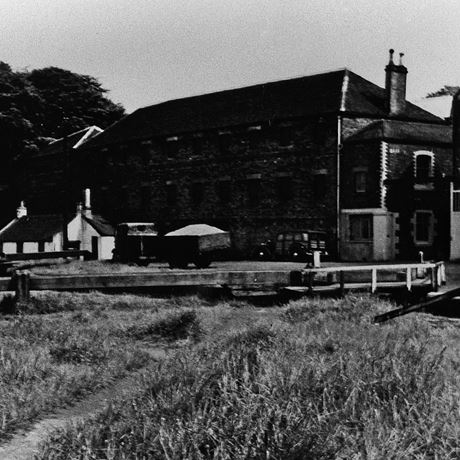
About Rosebank
This Lowland malt with its gentle, fruity palate, commands a dedicated following.
Much of Rosebank’s history – and fate – has been dictated by the canal upon whose banks it sits. It made sense to build a distillery beside the Forth & Clyde, the waterway which linked Scotland’s east and west coasts, and therefore its two main cities, Glasgow and Edinburgh. It made less sense to have a distillery there when the canal was closed and choked by detritus. It makes sense to have a distillery open again now that the canal has been reopened and tourists are coming to Falkirk to look at the Wheel which lifts boats between the Union and the Forth & Clyde – but is it too late?
There are records of a family called Stark distilling on the wider site as early as 1798. In 1817, a distillery named Rosebank was operational for two years, while in 1827, the Stark family re-emerged to operate the Camelon distillery which sat on the opposite bank of the canal.
In 1840, what had been Camelon’s maltings were converted by James Rankine into the new Rosebank. Under the Rankine family’s control, Rosebank prospered. In 1861, the Camelon distillery buildings were demolished and a new maltings supplying Rosebank was built, with the malt being barrowed over the canal to the distillery on a bridge.
In 1914, Rosebank became one of the founding members of the Lowland conglomerate Scottish Malt Distillers [SMD] in 1914 which was folded into DCL in 1925.
It ran continuously, bar a brief wartime hiatus, until 1993 when it closed. The reason was not to do with quality – the malt was highly regarded – but the unwillingness of its then owner (at the time UDV) to pay an estimated £2m cost of upgrading its effluent treatment plant. Problems over road access were another contributory factor.
Rosebank could conceivably have been saved had it been chosen as the Lowland member of UDV’s [later Diageo’s] Classic Malts Selection which launched in 1988. After all, an 8-year-old had been part of DCL’s ‘Ascot Malt Cellar’ six years previously when the firm attempted, somewhat lackadaisically, to enter the malt market.
Legend has it that the decision to choose Glenkinchie was because Rosebank was next to a then closed, stagnant, canal and therefore not as much of a tourist destination.
The distillery site was sold in 2002 to British Waterways.
However in October 2017 whisky blender and bottler revealed plans to purchase the site from British Waterways, and reopen the distillery. The company also separately acquired the Rosebank trademark from Diageo.
Rosebank distillery is expected to be operational again by 2019 at the earliest.
The Scotch Malt Whisky Society (SMWS) was founded in 1983 by a group of friends lead by tax accountant Phillip ‘Pip’ Hills as a private members club. The concept behind the society was to source casks from all over Scotland which would then be bottled and made available exclusively to its members. Perhaps the most famous feature of these bottles are the unique codes. Each distillery is represented by a different number and the following digits indicate that particular release. That same year, the SMWS set up its first location in Leith’s Vault buildings in Edinburgh where it still stands today.
59.4% ABV
70cl
| Specification name | Specification Value |
|---|---|
| Country | Scotland |
| Region | Lowlands |
| Whiskey style | Single malt, Single cask, Cask strength |
| Whiskey variety | Scotch |

Your Browsing History